
Dare County Criminal Court Cases
Dare County criminal court cases are part of North Carolina's unified General Court of Justice. Dare District Court hears misdemeanors, traffic matters, infractions, juvenile cases, and early felony proceedings. A felony normally begins there with a first appearance. If the prosecutor proceeds and a grand jury returns an indictment, Superior Court handles arraignment, pretrial work, a plea or trial, and judgment. Both divisions use the Dare County Justice Center in Manteo. The towns do not run separate criminal courts.
The Clerk of Superior Court keeps the case file. That file is the best source for the charging paper, docket, motions, hearing entries, disposition, and signed judgment. The Dare court contact directory separates the clerk, District Court, Superior Court, magistrate, and District Attorney lines. It helps a caller reach the office tied to the record instead of treating every court question as the same request.
The North Carolina eCourts overview shows how the statewide system now links the public to court services.
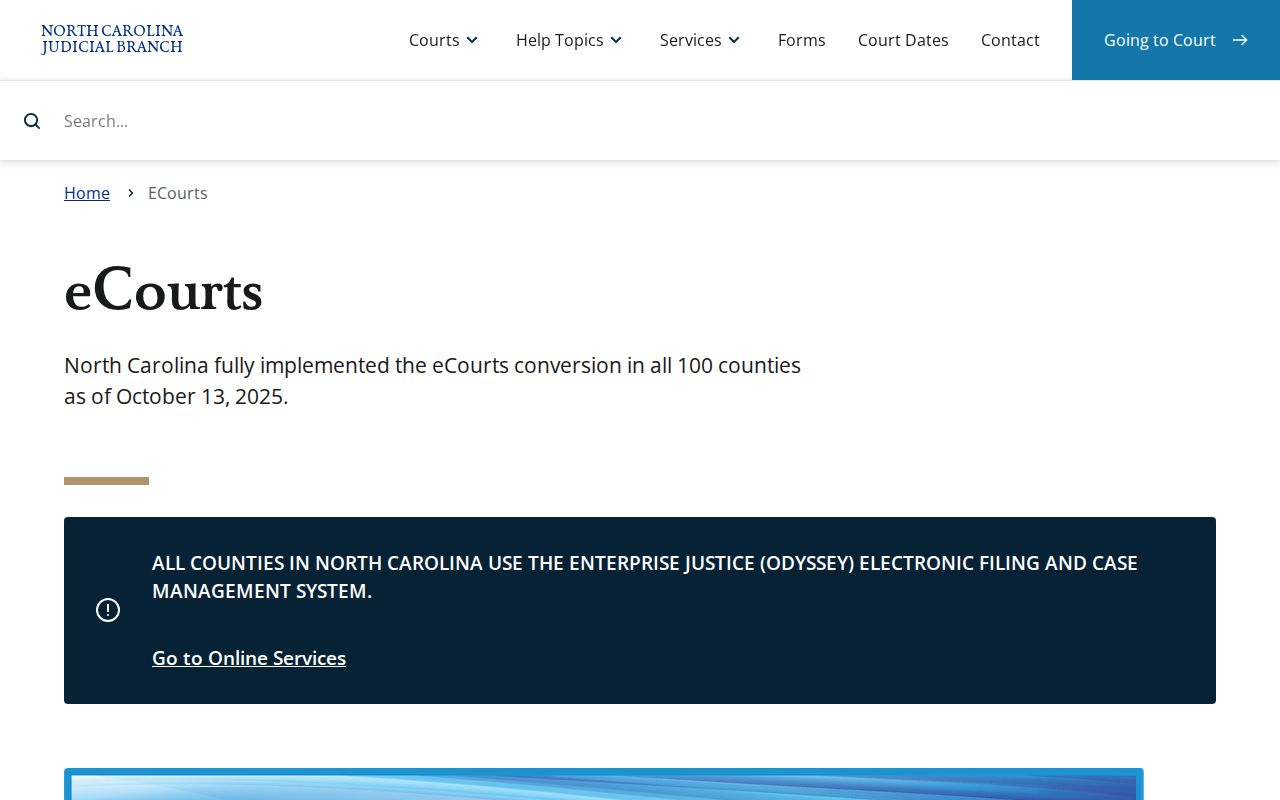
That statewide conversion is why current Dare County case searches should follow eCourts guidance, not old terminal-only instructions.
Dare Criminal Cases by Court
Court level changes what a searcher should expect to find. District Court records may show a misdemeanor from filing through judgment, while a felony record can show its first stages before the prosecution moves into Superior Court. The same defendant can therefore have entries tied to more than one court level. Traffic citations issued by Kill Devil Hills, Kitty Hawk, or Nags Head also route to the state court system in Dare County.
| Court or office | Criminal record work | Official contact |
|---|---|---|
| Dare District Court | Misdemeanors, traffic, infractions, and early felony matters | Justice Center; judges 252-331-4500 |
| Dare Superior Court | Felony trials, felony judgments, and expunction filings | Justice Center; clerk 252-475-5200 |
| District Attorney, District 1 | State prosecution and charge decisions | 252-331-4530 |
| Magistrate | Initial process and bond records | 1044 Driftwood Drive; 252-475-9228 |
These are distinct custodians and roles. The clerk provides public court records but does not explain legal strategy. The prosecutor controls prosecution within the law, while the magistrate handles initial process and release matters. A reader who starts with the court level and case number will usually avoid being passed among offices.
Searching Dare County Case Records
The free North Carolina eCourts Portal is the first stop for a known Dare County criminal case. Basic public search does not require a login. Portal results are case information, though, and the Judicial Branch directs background-check requests to a clerk. Remote documents can also be incomplete. Use the result to identify the right file, then obtain the authoritative item from the Dare County clerk.
- Open Smart Search and enter a record number or party name. Try exact spelling first, then a known name variant.
- Confirm that the location is Dare County and compare the case number, file date, and case type.
- Open every charge sequence. Read status and disposition separately rather than relying on the case caption.
- Check calendar and event entries for the next hearing or past court action.
- Ask the Dare County clerk for the charging instrument, judgment, or other document that is absent online.
| Portal control | Type | Required | Use |
|---|---|---|---|
| Smart Search | Search control | Yes | Searches court records; calendar and payment tools are separate |
| Record Number | Text | One search key | Uses a known case or citation number |
| Party Name | Text | One search key | Accepts a person or business name |
| Advanced Filtering Options | Expandable filters | No | Narrows broad results; available choices vary |
| Case Search | Button | Yes | Runs the query |
| Reset or Clear | Button | No | Removes entered criteria |
Note: A portal match is not proof that each charge ended in conviction; the disposition and judgment supply the outcome.
Missing Dare Court Documents
A Portal entry may list a case without displaying the paper a reader needs. Online access and the clerk's file are not equal. If the charging instrument, order, judgment, or an older filing is absent, note the full case number and contact the Clerk of Superior Court. Public courthouse terminals offer another search path. Official guidance says those terminals can search criminal cases by defendant, case number, and even victim or witness name.
The Judicial Branch court-record instructions explain the online, terminal, paper-file, and copy channels.
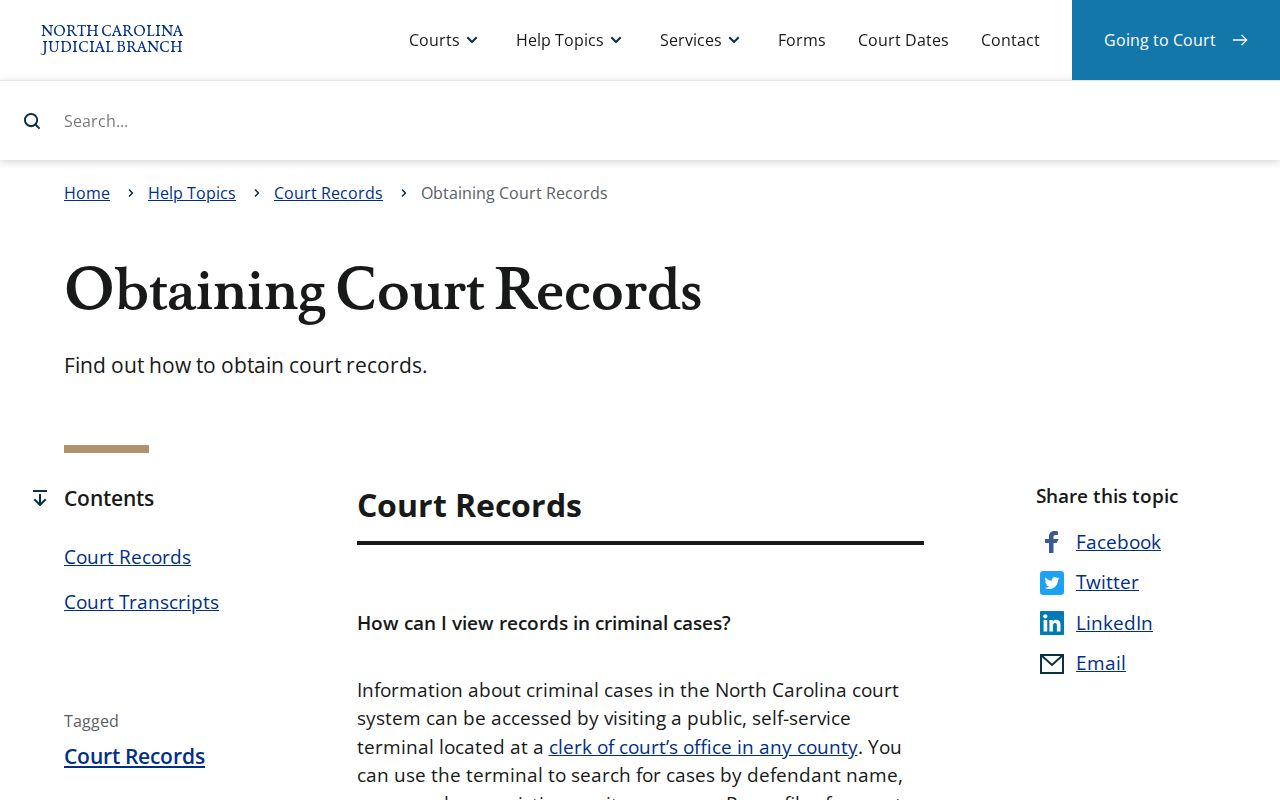
The image reinforces the key fallback: use the clerk's counter when a digital summary does not include the actual filing.
A broader Dare County name check is a separate clerk service. It costs $25 and searches charges filed only in Dare County. A requester can apply at the counter or mail the form, payment, and a self-addressed stamped envelope to Clerk of Superior Court, ATTN: Criminal Record Check, P.O. Box 1849, Manteo, NC 27954. The name-based result does not confirm identity through fingerprints and should not be confused with one known Portal case.
Dare County Clerk of Superior Court
962 Marshall C. Collins Drive
Manteo, NC 27954
252-475-5200
Criminal files, public terminals, county name checks, copies, and expunction filings.
Inside a Dare County Case File
A Dare County criminal case file follows the prosecution rather than the jail stay. It may identify the state and defendant, the court, counsel, charges, sessions, rulings, and outcome. Each count can end in a different way. Read the charge sequence and its matching disposition together. A booking page, an SBI history, and a clerk file arrange facts for different tasks and should not be treated as copies of one another.
| Case number and court | Identifies the Dare County file, court division, location, case type, filing date, and status. |
|---|---|
| Charging document | States the filed accusation, alleged date, offense description, class, and process identifiers. |
| Docket entries | Lists court events in time order, including filings, settings, and rulings. |
| Hearing dates | Shows the session, date, time, courthouse, courtroom, and event type when public. |
| Disposition and judgment | Separates pending counts from dismissals, pleas, findings, acquittals, and convictions. |
| Sentence and conditions | Records the ordered sentence, costs, fines, and other public terms in the judgment. |
Portal attachments vary, so a line on the docket may be only a pointer to a document. Request the signed judgment when exact sentence terms matter. Redacted identifiers and protected data will not become public merely because the rest of the file can be inspected.
Read Dare Case Outcomes Carefully
“Pending” describes present status, not a final result. A dismissal is an outcome without a conviction, yet the case may remain visible unless an expunction applies. An acquittal means the factfinder did not convict. A plea is the defendant's formal response, while a judgment is the court's formal adjudication and sentence. Those terms mark different points in Dare County criminal court cases.
- Disposition
- The outcome assigned to a charge, such as dismissal, conviction, or not guilty.
- Indictment
- A grand-jury accusation that supports felony prosecution in Superior Court.
- Docket
- The chronological record of events and filings in the case.
- Concurrent sentence
- Two or more sentences ordered to run at the same time.
- Consecutive sentence
- Sentences ordered to run one after another.
North Carolina structured sentencing also means the charge class alone does not reveal the sentence. Prior record level and the chosen statutory range affect a felony judgment. A charged offense can change before final judgment, so use the conviction offense and signed order for the end result.
How a Criminal Case Moves
A Dare County case may begin with an arrest, citation, or summons. A magistrate addresses initial process and release. District Court conducts the first appearance for a felony, and the prosecutor screens the charge. When a grand jury returns a true bill, the felony can proceed to Superior Court for arraignment and pretrial work. A plea or trial leads to a disposition and, when there is a conviction, a judgment and sentence. Appeals create a further court record.
Case flow: Charges Filed › Arraignment › Pretrial › Plea or Trial › Disposition › Sentencing
The flow is a map, not a promise of timing. A case may end at screening or dismissal, include several hearings, or contain counts that move on separate tracks. Calendar entries should be checked close to the court date because settings can change.
Dare Cases Through RPA Cloud
NCAOC's Remote Public Access Cloud offers real-time statewide information from all one hundred counties. Its scope includes pending cases, prior convictions, infractions, judgments, and liens. It is a paid agreement product designed for sustained access, not the practical route for a person checking one Dare County court case. The free Portal, courthouse terminal, and clerk remain the direct public chain for an occasional request.
The official RPA terms and fee page lists a $495 initial connection with two user and two administrator IDs, $70 for each extra user, and transaction charges of $0.39. Many function-key tasks count as transactions. Bills are due within thirty days, a late fee may follow, and access can end after prolonged nonpayment.
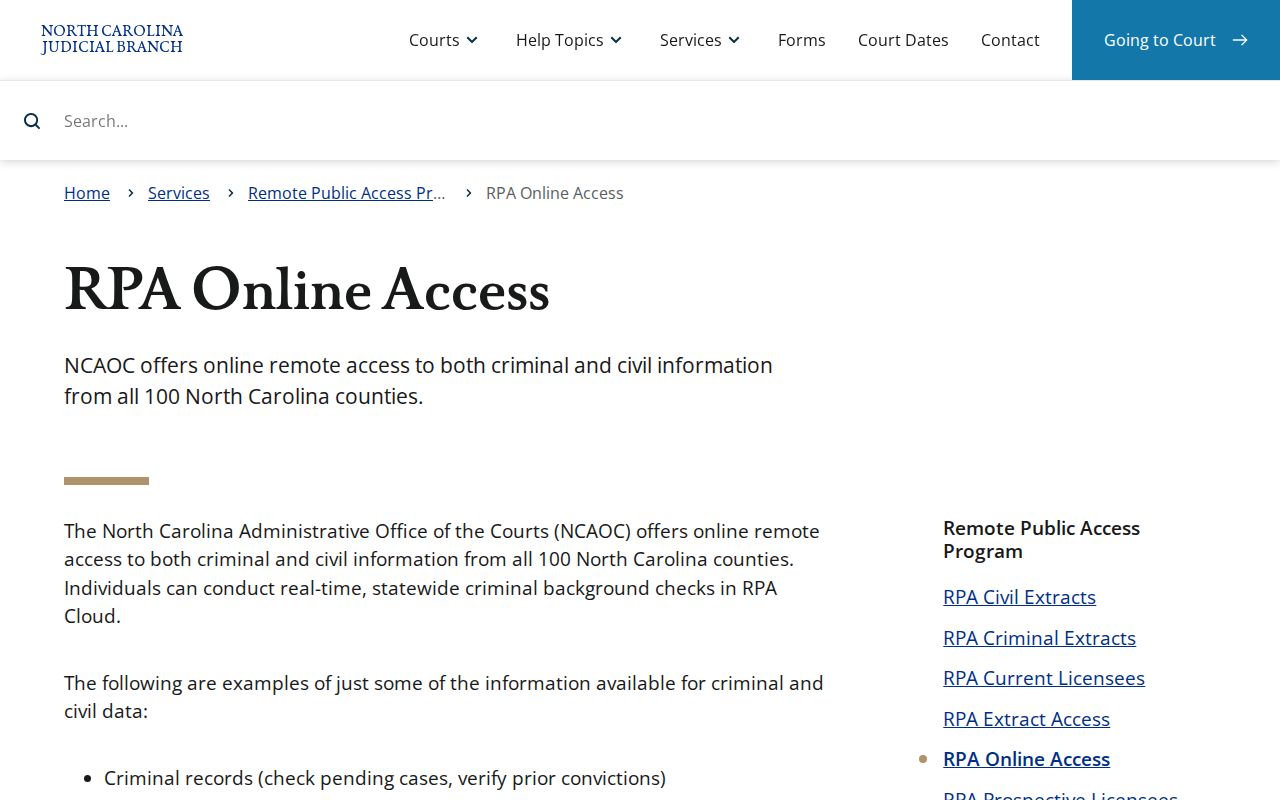
This access model is useful to understand because a paid statewide feed is not the same service as a free Portal result or a certified clerk copy.
Case Record Access & Restrictions
North Carolina Public Records Law supports inspection of public government records at reasonable times and under reasonable supervision. Court access still has limits. Juvenile matters, expunged cases, sensitive victim or minor details, and sealed material can be withheld or redacted. A public court file does not open confidential SBI repository data or every police investigative detail.
Start with the office that holds the record. For Dare County criminal court cases, that is the clerk. G.S. 132-6 covers inspection and copies, while G.S. 15A-151 protects expunction files and limits access. If a public case cannot be found, ask whether the issue is spelling, venue, an old file, redaction, or restricted status. Do not assume that an empty search proves no record ever existed.
The official Dare County court directory supplies the current clerk and court lines.
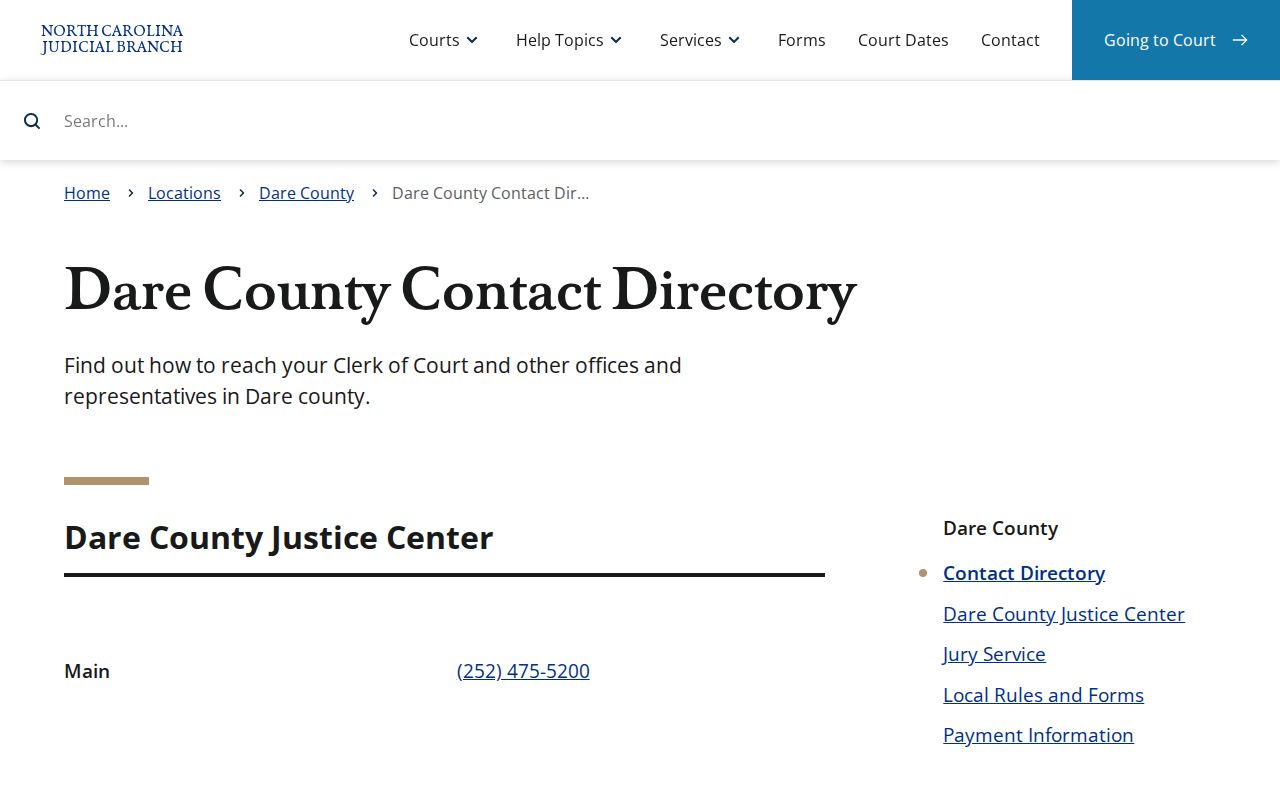
The directory helps route a missing-file question to the clerk instead of to a judge, prosecutor, or unrelated county office.
Federal Criminal Cases from Dare
Not every offense tied to Dare County appears in state eCourts. Federal matters lie in the U.S. District Court for the Eastern District of North Carolina. National Park Service land, maritime activity, and other federal jurisdiction can change the court and custodian. PACER is the official federal docket and document system. It requires registration and may charge electronic access fees under current federal judiciary rules.
The official PACER source shows the separate federal search channel.
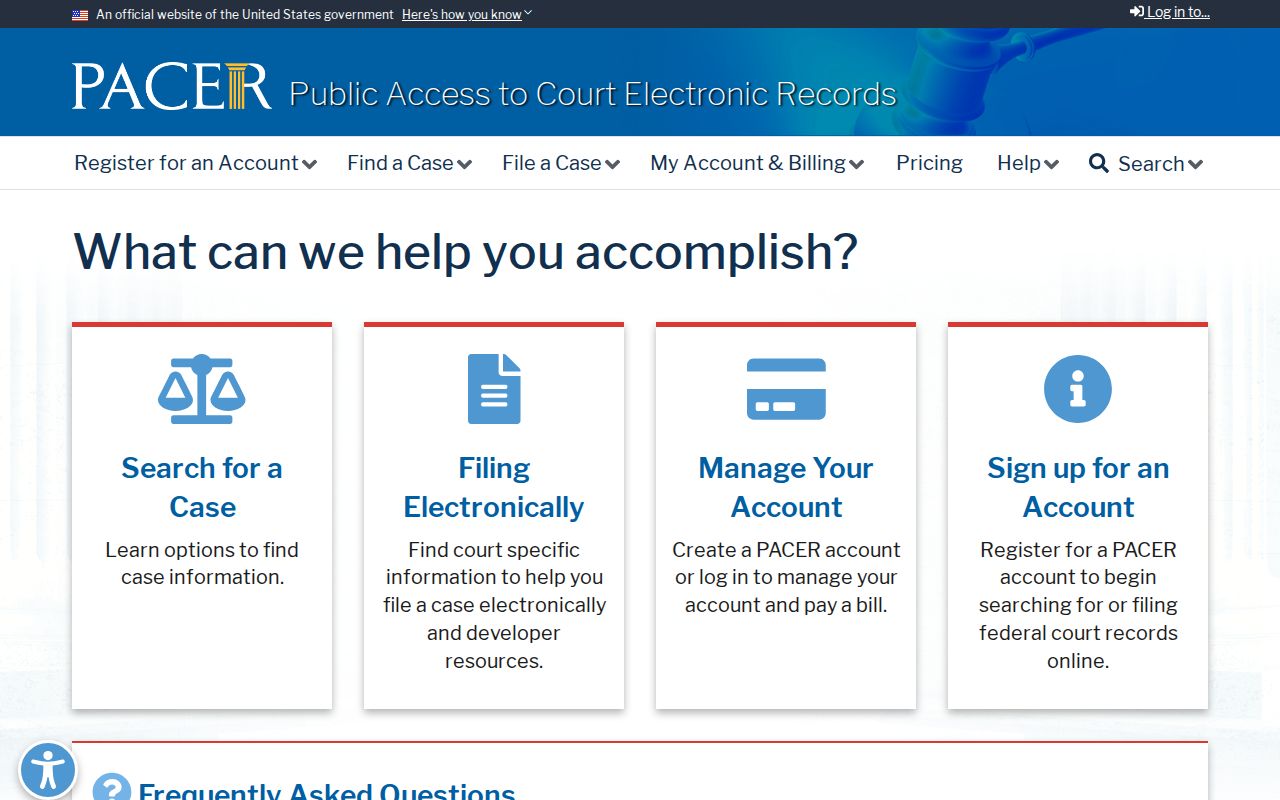
A searcher should use the Eastern District venue and federal case number rather than expect a federal docket inside the Dare County clerk's state file.
This boundary is especially relevant along the Outer Banks, where town, county, state, and federal agencies can all take part. The arresting agency and booking location do not alone determine where the case is filed. Confirm the charging court before choosing a portal.